
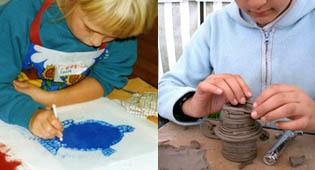



growing concerns
Who else thinks like this?
Seymour Papert -
The creator of Logo -
Sherry Turkle quotes from Papert’s first book 'Mindstorms' (publ. 1980):
"In his book ‘Mindstorms: Children, Computers, and Powerful Ideas’ Seymour Papert writes of falling in love with the gears of a toy car that his father gave him when he was two. [He] fell in love with the gears and through them fell in love with science…if anyone had tried to test him to determine what was happening as his curiosity was expanding, they would have found nothing to measure.
The story of Papert's gears makes plain that finding nothing to measure does not mean that nothing is going on. Too often, if we can't formulate a test, we give up on a method or we give up on a child."
In his later book ‘The Children’s Machine’ (publ. 1993) he talks about how methods of teaching have not changed for a hundred years, but with the new “knowledge machine”, (referring to personal computers and the internet -
He predicted strong resistance to change by traditionalists, and has been critical of the limitations inherent in the current educational system. 25 years later these changes have not yet taken place, and we are still in the phase he described of “resistance to change” -
Failures of the 1960’s & 70’s ‘progressive movement’ in education (open-
who is this? > Seymour Papert
resource link > Seymour Papert: The Children’s Machine
what do we mean -
• there is special knowledge and understanding to be gained by making things
• childhood plays a vital part in this innovative process
a historical perspective
• observation, trial and error
• origins of maths
• patterns and geometry
facing the future
growing concerns
• Neil MacGregor
• Sherry Turkle
• Seymour Papert