
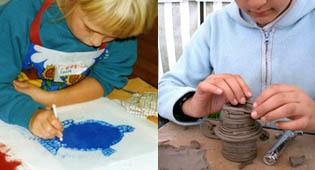



a historical perspective
Evidence from the past
The overwhelming evidence from our past is that making things is part of human nature. We need to make objects to survive, and they become part of our culture. The exploitation of useful materials in our environment is a process of continual development.
This development from hand technology to machine technology, and now electronic digital technology, is well documented. We learn in school about many different eras of our history -
By looking at the things people have made in the past you find evidence of how this kind of technological understanding has developed. Archaeologists, anthropologists and historians are finding new ways to communicate how this creative technology has developed and what it means to us. They are showing how 'making things' plays an important part in our intellectual development.
This is a narrative of how the act of making throughout history is the catalyst for new thinking and new ideas.
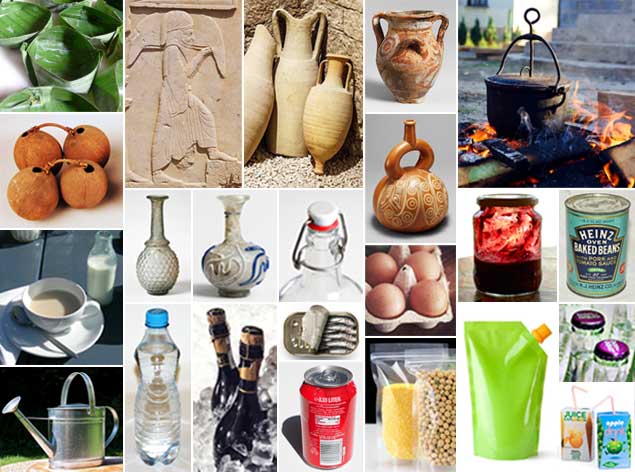
the development of vessels for carrying and storing liquids has transformed the way we live
what do we mean -
• there is special knowledge and understanding to be gained by making things
• childhood plays a vital part in this innovative process
a historical perspective
• observation, trial and error
• origins of maths
• patterns and geometry
facing the future
growing concerns
• Neil MacGregor
• Sherry Turkle
• Seymour Papert