



growing concerns
Who else thinks like this?
Reggio Emilia Atelier -
'The Wonder of Learning: The Hundred Languages of Children' is a term often used to describe the pre-
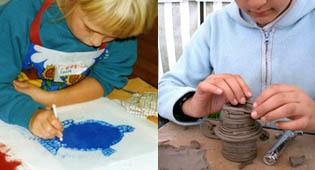
"A first encounter for children with materials is to explore and act on them, this is a necessary step in the children’s process of knowing… When we consider a material by itself in the way it is presented to a child, or when we just begin to explore it, it is too soon to speak about the language of a material…
It is through interactions between a child and a material that an alphabet can develop. As children use their minds and hands to act on a material using gestures and tools and begin to acquire skills, experiences, strategies and rules, structures are developed within the child that can be considered a sort of alphabet or grammar.
This alphabet or grammar, of the use of materials, has to be discovered by children in partnership with adults. It is essential for children to acquire knowledge of materials, gain competence with them, and use them in a variety of ways."
In the same book Charles Schwall, (an atelierista in USA), says:
"The atelier is a workshop for children’s ideas that manifest through the use of many materials.
The ways in which children invent with materials are often unexpected and surprising -
For teachers in Reggio Emilia 'being confused' is also an important aspect of learning. They often begin a project with no clear sense of where it might end, and to purposely allow mistakes to happen. Truly open-
who is this? > Loris Malaguzzi
what do we mean -
• there is special knowledge and understanding to be gained by making things
• childhood plays a vital part in this innovative process
a historical perspective
• observation, trial and error
• origins of maths
• patterns and geometry
facing the future
growing concerns
• Neil MacGregor
• Sherry Turkle
• Seymour Papert